

Artificial intelligence in software development is rapidly shifting from decorative LLM chat widgets to agentic workflows—systems capable of understanding intent, executing multi-step tasks, and actively assisting in application development and data management.
In a recent Q&A panel featuring Rick Kalman (Claris Director of Product Management), Ernest Koe, and Todd Geist (Proof+Geist), the Claris community took a deep dive into the Agentic Development Toolkit for FileMaker (ADT). The FileMaker ADK (Agentic Development Kit) is in developer preview at this time and will be more widely available in the future.
Whether you’re a developer looking to supercharge your workflow or a technology leader evaluating Claris FileMaker for your enterprise stack, here are the key questions, core concepts, and insights from the panel.
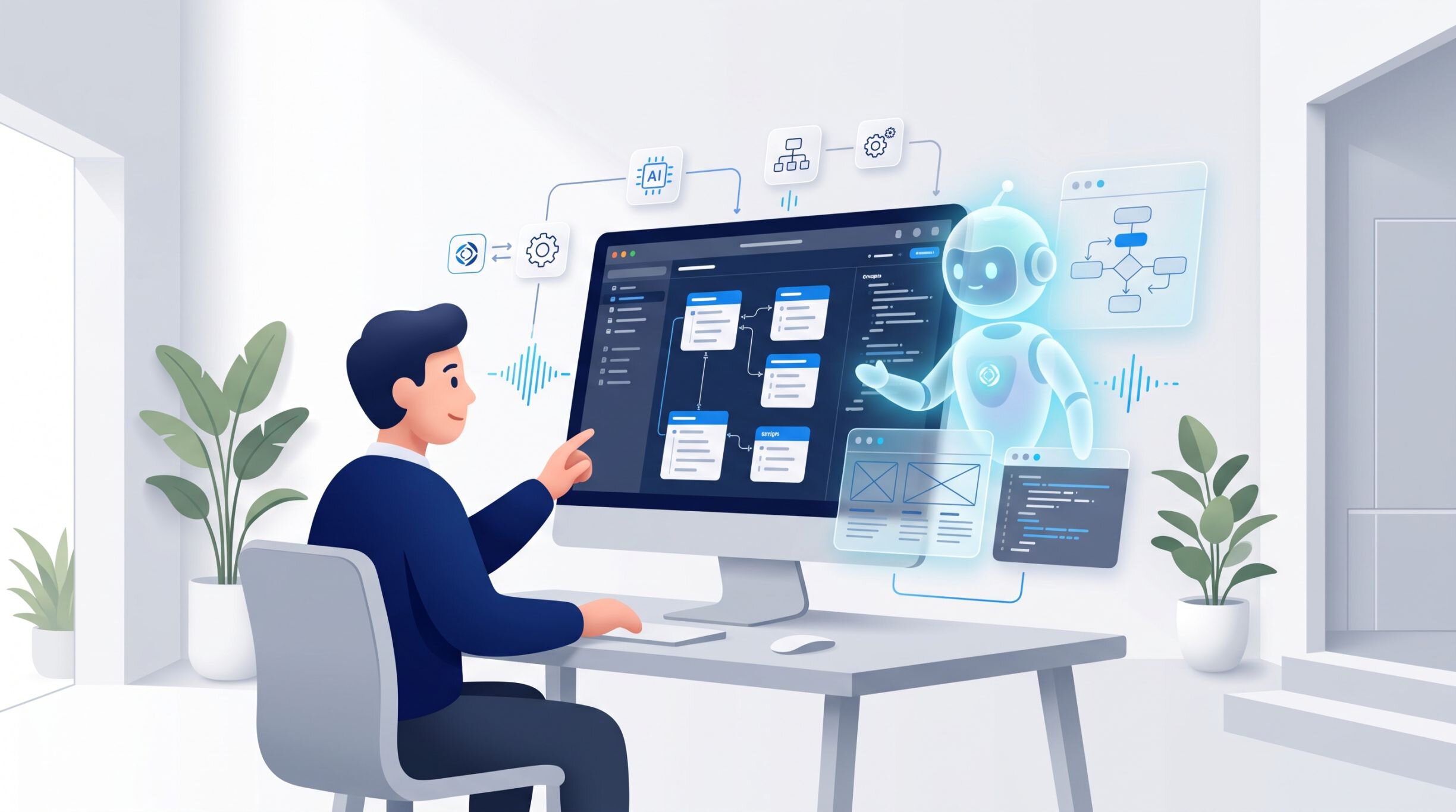
What Is “Agentic Development” in the Claris Ecosystem?
The core question: What makes AI “agentic,” and how does it differ from existing AI scripts or simple prompt integrations in FileMaker?
- Beyond text generation: Standard AI integrations process a prompt and return text (such as summarizing a field or generating an email body). Agentic AI, by contrast, operates with autonomy within defined boundaries: it can reason about a multi-step goal, determine which tools to execute, check its own output, and refine its steps.
- The toolkit concept: The Agentic Development Toolkit provides developer-grade harnesses, schema definitions, and API hooks that allow AI agents to safely read, inspect, create, and modify FileMaker assets or workflow logic under human developer oversight.
Practical Use Cases: Where Does Agentic AI Pay Off Today?
The core question: What real-world problems does agentic development solve for FileMaker teams right now?
- Automated code and schema inspection: Agents can analyze complex Relationship Graphs, detect orphaned scripts, or flag performance bottlenecks across large legacy solutions much faster than manual review.
- Context-aware solution assistants: Instead of building hundreds of custom UI forms for rare edge cases, teams can deploy embedded agents that interpret natural-language requests from end users and execute complex Claris FileMaker scripts in the background.
- Rapid prototyping and boilerplate: Developers can use agentic tools to scaffold initial database structures, generate layouts from schema specs, or write standard script steps from plain-English descriptions.
Architecture, Security & Governance
The core question: How do we balance agent autonomy with enterprise data security and system integrity?
- Human-in-the-loop (HITL) controls: AI agents should act as high-speed copilots rather than unsupervised administrators. Critical database schema modifications or destructive data scripts require human confirmation steps.
- Granular access control: By utilizing standard FileMaker Privilege Sets, Extended Privileges, and API boundary definitions, agents only interact with data and schema elements explicitly granted to them.
- Context management and token efficiency: A key hurdle with large FileMaker systems is passing solution metadata to an LLM without overwhelming context windows or generating huge token costs. The toolkit leverages optimized representation formats, like structured JSON schemas, to keep requests fast and cost-effective.
What This Means for Business Leaders and Developers
For FileMaker developers:
- Focus on higher-value architecture: As AI handles repetitive scripting and routine layout creation, developers shift their focus toward complex business logic, UI/UX optimization, and enterprise integration.
- Evolving skillsets: Understanding prompt engineering, API tool-calling design, vector embeddings, and schema serialization becomes as important as knowing native script steps.
For business leaders and CTOs:
- Accelerated time-to-value: Custom software development timelines shrink significantly when developers use agentic tools to handle tedious configuration tasks.
- Future-proofing custom apps: Adopting FileMaker’s agentic framework allows custom business platforms to evolve alongside generative AI advancements without rebuilding core infrastructure.
Summary Takeaway
The panel with Rick Kalman, Ernest Koe, and Todd Geist highlights a clear trajectory: Claris FileMaker is positioning itself as an ideal platform for practical, domain-specific AI orchestration. By bridging high-level LLM capabilities with robust low-code database management, the Agentic Development Toolkit opens up exciting opportunities for modernizing business applications.
Watch the full panel discussion: Agentic Development Toolkit Q&A with Rick Kalman, Ernest Koe, and Todd Geist.
Looking to integrate AI workflows into your existing FileMaker solutions or explore custom app development? Reach out to the team at LuminFire to discuss how modernizing your stack can drive efficiency across your organization.

The LuminFire team is an elite group of software developers, engineers, and technology leaders with nearly 40 years of industry know-how. Passionate about empowering growth-focused organizations, the team is dedicated to removing technical obstacles and sharing insights to help businesses become more effective, productive, and profitable.