

The allure of “vibe coding”—building an app just by talking to an AI—is powerful. It feels like magic when you see a functioning login screen appear in seconds. But as any seasoned engineer will tell you, there is a massive difference between a “cool demo” and a “business-critical system.”
The problem is what many call the Context Cliff.
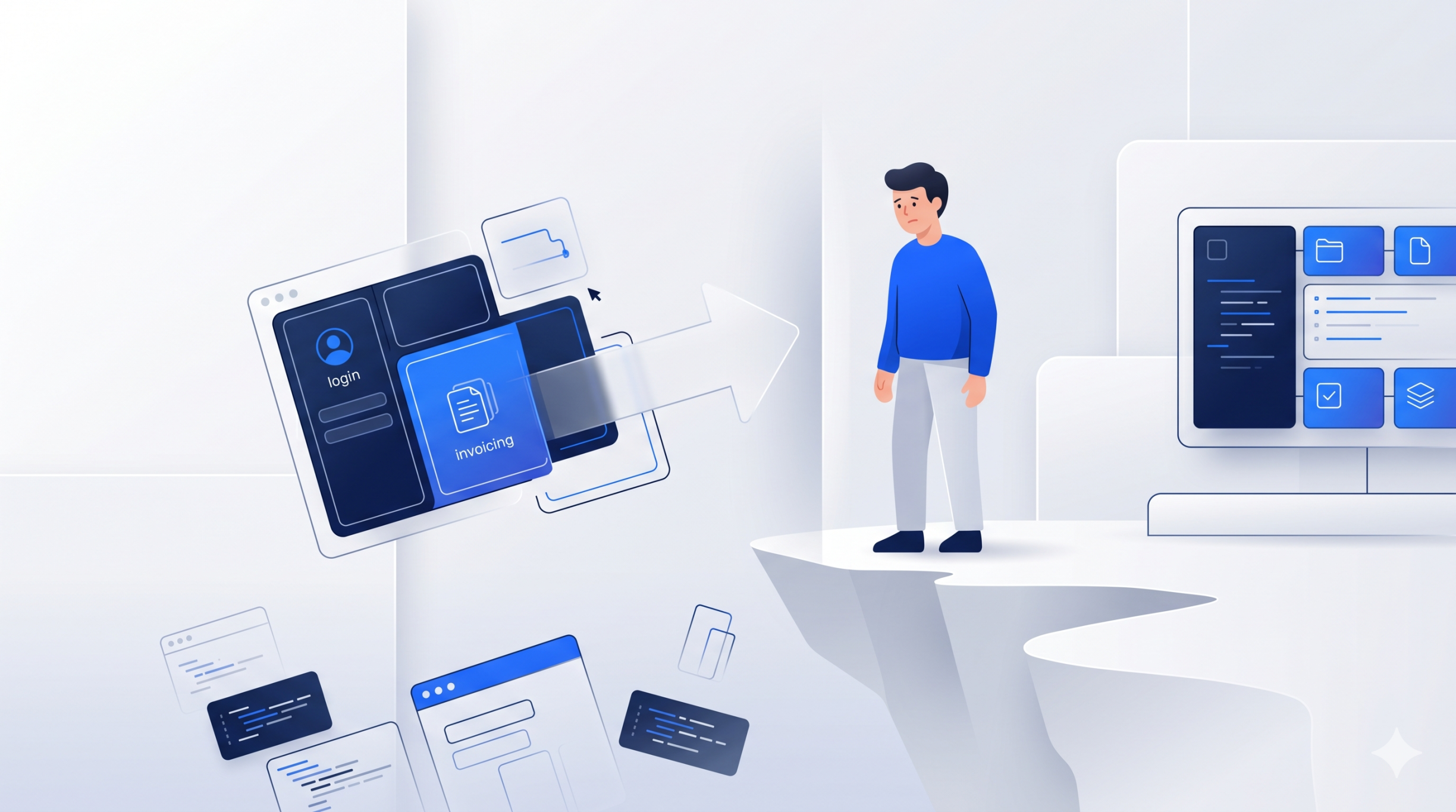
Every AI model has a limit to how much information it can “hold” at once, often referred to as a “context window.” Think of it like hiring a contractor to build your dream home, but they can only remember the last room they worked on. They’ll build a stunning kitchen, but by the time they’re finishing the master suite, they’ve forgotten where they ran the plumbing. When they get to the roof, they might forget the foundation even exists.
In professional software development, this leads to what we call Architectural Rot.
- The Spaghetti Trap: As you ask the AI to add more features—invoicing, user permissions, API integrations—it starts to lose the thread of the original logic. To satisfy your latest prompt, it might overwrite a critical security patch it wrote three days ago because it no longer “sees” that code as relevant to the current task.
- The Bloat Factor: AI doesn’t refactor code by default; it accumulates it. It tends to solve problems by adding more layers rather than refining the existing ones. Over time, your app becomes a tangled mess of “spaghetti code” that is impossible for a human (or even the same AI) to navigate later. This is how “technical debt” is introduced on day one.
- The Scalability Wall: An AI doesn’t inherently understand high-performance database design. It’s optimized for the now, not your future growth. It might build a system that works for three users during a demo but crawls to a halt when your entire team logs in or when your database hits 100,000 records.
At LuminFire, we don’t just write lines of code; we build architectures. We use smart technology, including Large Language Models (LLMs) and other technologies that are generally called AI, to accelerate the process, but we ensure the foundation is solid so that when your business grows, your software usability and performance doesn’t fall off a cliff. Our team of engineers provide the continuity that a predictive model simply cannot.

The LuminFire team is an elite group of software developers, engineers, and technology leaders with nearly 40 years of industry know-how. Passionate about empowering growth-focused organizations, the team is dedicated to removing technical obstacles and sharing insights to help businesses become more effective, productive, and profitable.