

Choosing visual drag-and-drop platforms like Elementor, Divi, or WPBakery can seem like an ideal solution during a website build or redesign. They promise your marketing team complete visual layout control, eliminating the need for a developer for basic tasks like uploading images or moving text blocks.
However, beneath this quick and seemingly effortless facade lies the potential for severe operational drag. While the initial setup might feel like a victory for speed and autonomy, the long-term reality often introduces architectural inefficiencies that quietly throttle your website’s performance and scalability.
Business leaders should carefully weigh the hidden consequences before adopting heavy, monolithic page builders—and explore better alternatives.
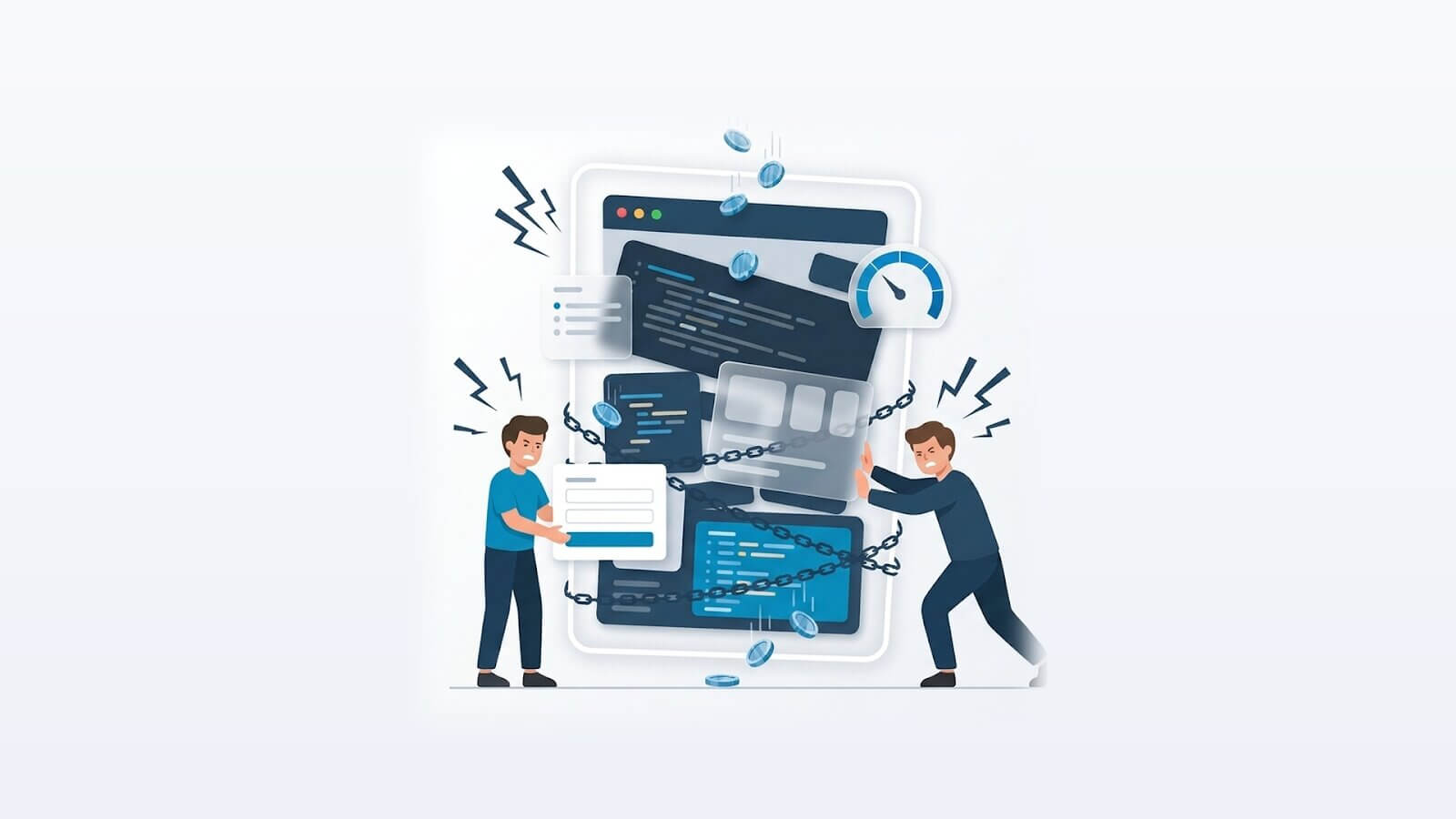
Speed Is Revenue—and Heavy Tools Slow You Down
Potential clients expect pages to load instantly. If your site takes more than a couple of seconds to display, prospective buyers bounce straight to a competitor.
Tools like SeedProd, Divi, and other heavy visual editors add massive amounts of hidden weight behind the scenes to power all those design toggles. It’s like trying to run a sprint while carrying extra luggage. Even a simple page ends up carrying thousands of lines of unnecessary structural background code. That extra weight slows down page loading times, degrades user experience, and directly impacts your Core Web Vitals—the exact metrics Google uses to decide where you rank in search results.
“Total Flexibility” Causes Brand Drift and Hidden Costs
Here’s where it gets tricky for growing organizations: when everything on a page is editable, anyone with site access can make design choices that are in violation of your brand standards.
Without strict template boundaries, generic page-building plugins encourage unchecked brand drift. You quickly end up with rogue styling decisions across your site—like bright red text that’s twice as big as it should be, mismatched button colors, or heading styles that change from page to page.
Updating core design elements can become a major financial headache with drag-and-drop platforms because they lack a built-in global design system. While a properly constructed website allows you to update a primary color or heading style centrally in just minutes, these page builders force you to pay a technician to manually open, modify, and republish every single page— turning a simple 50-page header update into a costly, time-consuming project.
The Unexpected “Developer Tax”
Here’s a cost that rarely shows up on a product feature list: proprietary visual page builders make custom development significantly harder and more expensive.
Standard WordPress sites use a clean, predictable framework. Developers use standardized code insertion points (called hooks) to easily add custom features, CRM integration forms, or dynamic data output anywhere on a page. Page builders like Elementor or WPBakery ignore these standard conventions. They override the core layout system with their own proprietary wrapper code.
When your developer needs to output custom information or integrate a third-party tool in a specific spot, they can’t simply use standard WordPress methods. Instead, they have to jump through complex technical hoops or build hacky workarounds just to bypass the builder’s restrictions. You end up paying high hourly rates for developers to fight against your software rather than building features that actually grow your business.
Fragile Sites Lead to Higher Maintenance Bills
WordPress relies on an ecosystem of plugins to handle forms, security, and specialized features. Monolithic visual page builders plugins attempt to take over the entire visual architecture of your site.
When a builder constantly overrides your theme’s underlying structure, routine software updates can trigger unexpected formatting bugs, broken layouts, or script clashes. Instead of a quick monthly update, your team ends up paying developers extra hours to troubleshoot why a button disappeared or why a layout shattered after a security patch.
You Get Trapped in a Proprietary Box
A great website should be an adaptable asset that grows alongside your business. However, tools like Divi, Thrive Architect, or Elementor wrap your content in proprietary formatting stored deep inside your database.
If you ever want to redesign your site, update your branding, or switch to a faster core structure, you can’t simply transfer your text and images over. You’re effectively locked in. Undoing a heavy page-builder setup unfortunately often means paying to recreate the entire site from scratch.
A Better Path to Visual Control
Steering clear of bloated page builders doesn’t mean stripping design control away from your team. You can give your marketing team full visual freedom without sacrificing speed, brand consistency, or stability.
At LuminFire, we guide clients toward well-engineered visual options like Beaver Builder or the native WordPress block editor (Gutenberg). These platforms provide flexible visual building tools while enforcing a clean global design system and respecting core WordPress architecture. Your team gets the ease of editing they need, while your business keeps a fast, secure, brand-compliant site that stays affordable to maintain over the long haul.
Trying to Convince Your IT Department or Internal Developers?
If you’re convinced that heavy page builders are hurting your business, but you need your technical team on board, we’ve got you covered. Share our companion piece written specifically for developers.

The LuminFire team is an elite group of software developers, engineers, and technology leaders with nearly 40 years of industry know-how. Passionate about empowering growth-focused organizations, the team is dedicated to removing technical obstacles and sharing insights to help businesses become more effective, productive, and profitable.